
White Pine S.A.V.E. Search
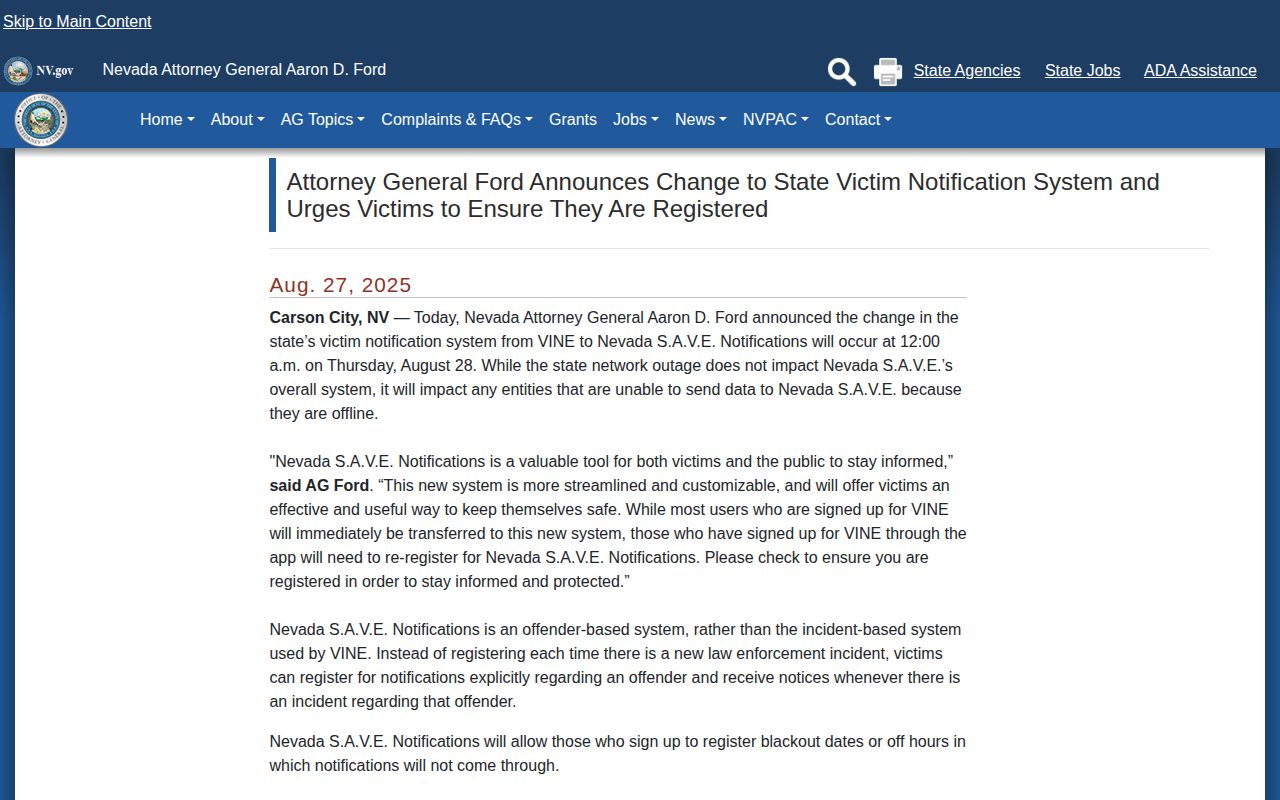
Nevada S.A.V.E. replaced VINE as the live statewide system. The Nevada Attorney General announced that S.A.V.E. opened on August 28, 2025 and that Nevada VINE search and notification ended the next morning. Most existing registrations migrated, though registrations created only in the old VINE app required action. Current White Pine County searches must use Nevada S.A.V.E..
S.A.V.E. is offender-based. A registration follows the selected person across participating Nevada custody and supervision agencies instead of requiring a new registration after each covered move. State law calls for cooperation by sheriffs, police chiefs, NDOC, the Department of Public Safety, and the Parole Board. That scope can cover a White Pine County jail event, an NDOC prison record, or supervision activity. It does not turn the service into a federal locator.
The official S.A.V.E. search screen shows the current name-search instructions and warns that people no longer in custody may not appear.
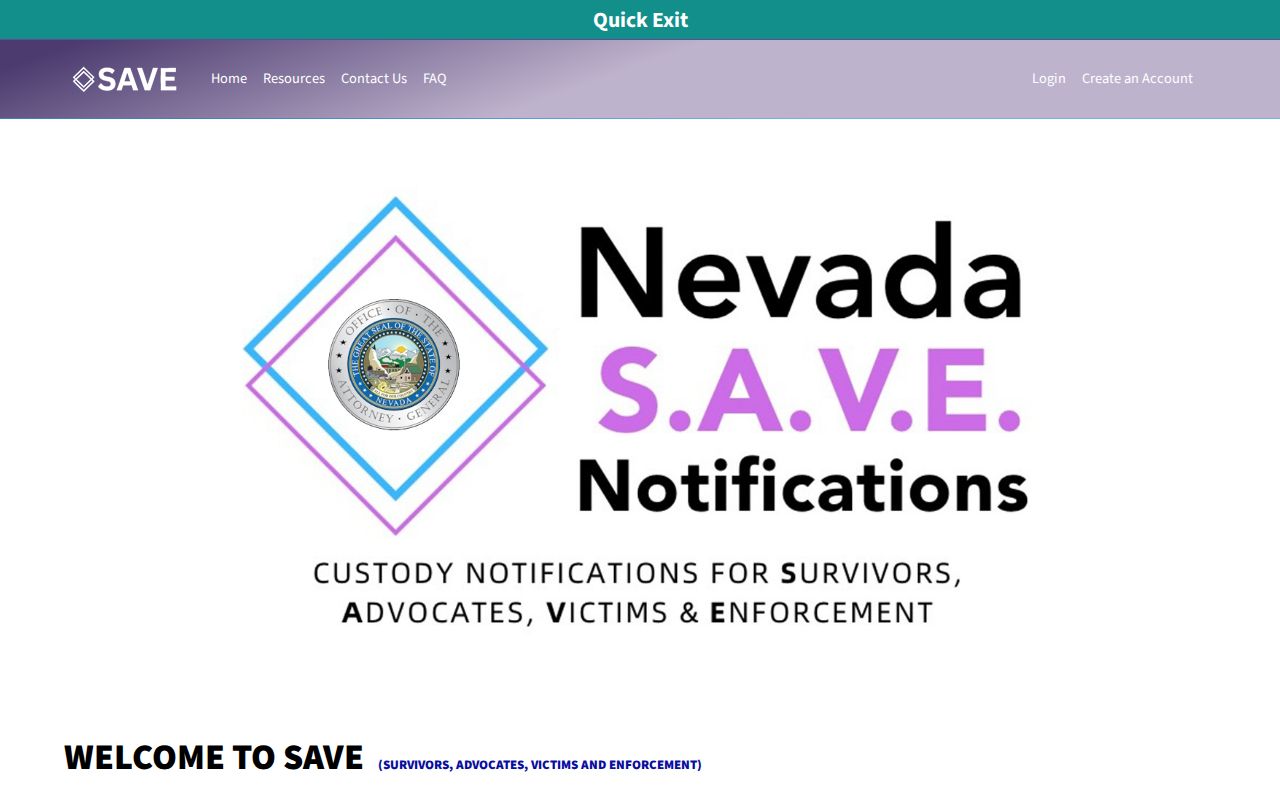
Search a White Pine Inmate
Search one known person at a time. Full first and last names work. When spelling is uncertain, S.A.V.E. recommends the first three letters of the first name and first three letters of the last name separated by a space. Complete the CAPTCHA, review each possible match, and do not select a person based on name alone.
- Open Nevada S.A.V.E. and choose the person-search option.
- Enter the full name or the recommended partial-name pattern, then complete the CAPTCHA.
- Compare the returned identity and agency details with known facts about the White Pine County case.
- Open the matching record and read the exact custody or supervision wording and update date.
- Save the result date. If release is shown or an alert arrives, obtain the originating agency's custody-ending record.
A name can match more than one Nevada record. Use an NDOC offender ID, county booking number, court case number, and agency dates when available. A photo alone is not enough to merge two records.
White Pine Release Check Fields
S.A.V.E. presents a current notification record, not the full county booking file or NDOC sentence computation. Field wording can vary by participating agency and live status. Record the exact wording rather than converting every agency exit into “released.” A transfer may end one agency's custody while confinement continues elsewhere.
| Displayed item | How to read it |
|---|---|
| Name and identifying details | Search aids that must be checked against a stronger identifier |
| Custody or supervision agency | The Nevada agency reporting the current event |
| Custody or supervision wording | The agency's status language, which should be preserved exactly |
| Update context | When the participating system supplied the displayed information |
| Notification choices | Live channels offered for the selected person and event type |
A released White Pine County jail detainee should be confirmed with the Sheriff's Office and the county custody-ending entry. A state prisoner should be checked in NDOC, where PAROLE and INACTIVE-DSCHREL have distinct meanings. A federal prisoner belongs in the BOP locator, while possible immigration custody belongs in ICE's system.
Note: S.A.V.E. may report what a participating agency sent, but it does not issue a certified jail or prison release record.
Register White Pine Release Alerts
Select the correct person before registering. S.A.V.E. offers notification with or without an account. Live options can include automated phone, email, SMS or text-to-speech, and English or Spanish service. Release alerts can override blackout dates. Registration may be anonymous.
- Open the matching person record and select notification.
- Choose one of the channels offered by the live service and enter accurate contact details.
- Complete the current confirmation prompts. Do not use an old VINE PIN unless a historical record specifically requires it.
- Save the registration confirmation and note which person and agency record were selected.
- Preserve any alert with its time, wording, and sender, then verify the event with the reporting jail, NPP, or NDOC.
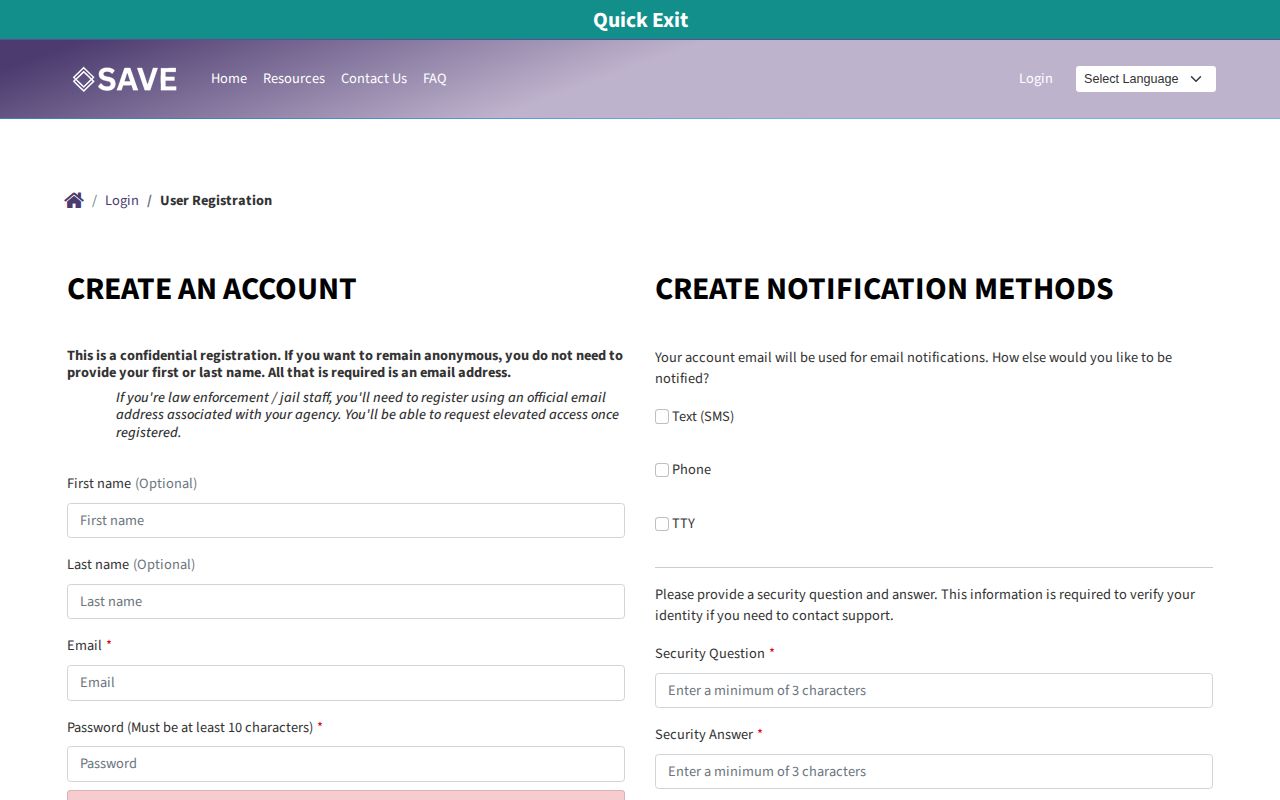
An optional account uses an email address, password, and security question. During the research check, account creation showed a temporary outage. Current help is available around the clock at 866-393-5445 or NVSave@ag.nv.gov; the support page states that email replies may take up to three business days.
The official registration screen shows the current account and alert process.
White Pine VINELink History
The older Nevada VINE workflow explains why many people still search for a White Pine County VINELink release check. Phone registrants chose a four-digit PIN. When an automated call arrived, the recipient entered that PIN followed by the pound sign to acknowledge it and stop repeat attempts. Email registration had no PIN.
Those steps are historical. Nevada VINE ended on August 29, 2025. A current user should not wait for VINELink, create an old Nevada registration, or use the old PIN as if it were part of S.A.V.E. The official Attorney General transition notice documents the switch and migration warning.
Old screenshots and notices may still use VINE terms. Date them, label them as obsolete, and use them only to understand a former registration. They cannot establish a person's present custody or release status.
White Pine Alert Limits
A notification can be fast, but it is not always complete. Data can lag. A service interruption can delay a notice. A person who is no longer in custody may stop appearing, even though an earlier registration can remain and resume updates after a later return. A transfer may also trigger an exit event from one agency without community release.
S.A.V.E. does not replace the BOP Inmate Locator or ICE Online Detainee Locator. It also does not make the Nevada Sex Offender Registry a general release search. That registry covers only qualifying registrations and does not establish the exact hour a White Pine County jail hold ended.
- Notification
- A message based on an event reported by a participating agency.
- Transfer
- A move between custodians or facilities, not a release to the community.
- Released
- An agency custody exit that still must be classified by destination and disposition.
- Official record
- The jail, NDOC, court, or supervision document maintained by the responsible office.
For a full person-specific route across custody systems, use the White Pine County released-inmate lookup. Keep S.A.V.E. focused on current Nevada alerts and follow each event to its source.
Confirm White Pine Release Records
For a county detainee, call the White Pine County Sheriff's Office and Jail at 775-289-8808. Ask whether the person is held now and, if not, whether the custody record shows release or transfer. A written custody-ending entry can state the date, time, disposition, authority, and receiving agency.
For a state-prison case, search the NDOC offender portal by offender ID or name. Read current agency status, release information, and any newer booking together. NDOC warns that its portal is raw data, is not guaranteed error-free, and is not an official record. Family Services can answer offender questions at 775-977-5707.
Resolve conflicts by source and time. A White Pine jail release followed by a state or immigration admission may mean transfer. A Board grant plus an active prison location may mean release planning is incomplete. Keep both dated records, ask the first custodian for the exit disposition, and ask the next custodian for the admission date.
Documentary county confirmation is available through a focused public-record request to the White Pine County Clerk. Identify the person, give a narrow date range, and request the jail booking or custody record with the date and time custody ended. Ask for the release or disposition entry, its code legend, the releasing authority, and the receiving agency when the exit was a transfer. This wording separates a true community release from a move to NDOC, another jail, or another custodian.
A court record can explain the legal reason for the exit. Ely Justice Court is the lower-court route, while the Seventh Judicial District Court clerk maintains felony and gross-misdemeanor matters. A bail order, judgment, dismissal, or later order may explain why the jail hold ended, but it may not state the exact time of physical release. Pair the court event with the jail entry when timing matters.
Older searches need extra care. A S.A.V.E. alert is built for notice, not long-term archive access. NDOC's separate release download can retain a release date and description after a live status changes. County records and court dispositions may remain available after a person no longer appears in a public notification search. Use the source that owned the custody event, then preserve the smallest set of records needed to resolve the question.
Ask the source office to explain any code that is not plain. Do not turn “hold released,” “inactive,” or “not currently found” into a claim of community release. When two agencies report events on the same day, the first exit and the second admission may describe one continuous transfer. The exact times and receiving-agency field resolve that sequence.